Tuesday, June 20, 2017

Europe - Females in Theatre and Drama in the 18th & 19th Century
Europe - Females in Theatre and Drama in the 18th & 19th Century


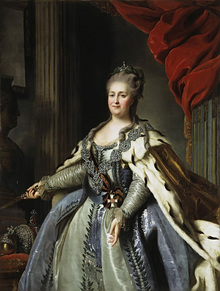
Catherine II the Great 
Catherine II the Great, Empress of Russia, who was born in 1729 and died of 1796 was a playwright, opera librettist and musician. In her lifetime she wrote fourteen comedies, nine opera librettos, seven proverb short plays and a number of other short plays and monologues. She created the Russian Imperial Opera and Ballet Theatre in 1783 and commissioned the building of the Bolshoi Kamenny Theatre in St Petersburg.
She wrote nine opera texts in addition to fourteen comedies, seven proverbs (short plays), and other dramatic writings. Her first play was O Tempora (1772) which was “Composed at Yaroslaff during the terrible visitation of the plague.” The play is a romantic love story. In the same year she wrote Mrs. Grumble’s Birthday where she caricatures the elite and educated and their small mindedness.
Catherine the Great’s A Basketful of Linen is a translation and transposition of Shakespeare’s The Merry Wives of Windsor. She also modelled her play Rurick is based on Shakespeare’s historical dramas. She was eclectic and diverse in her dramatic styles and content and even wrote to Voltaire about her desire to achieve a naturalism and truth in her work. Her other dramatic works include Передняя знатного боярина, комедия в одном действии - Perednyaya znatnogo boyarina (The Waiting Room of the Grang Boyard), Госпожа Вестникова с семьею, комедия в одном действии – Gospozha Vestnikova s semyoyu (Mme Vestnikova and her Family), Невеста-невидимка. комедия в одном действии – Nevesta-nevidimka (The Invisible Bride), Вот каково иметь корзину и белье, комедия в пяти действиях –Vot kakovo imet’ korzinu I belyo (This is How to Have Both the Basket and the Linen), Разносторонняя семья осторожками и подозрениями, комедия в пяти действиях – Raznostoronnyaya semya ostorozhkami i podozraniyami (The Versatile Family), Недоразумение, комедия в пяти действиях – Nedorazumeniye (The Confusion), Обманщик, комедия в пяти действиях – Obmanshchik (The Twister), Обольщенный, комедия в пяти действиях – Obolshchonny (The Seduced), Шаман Сибирский, комедия в пяти действиях – Shaman Sibirsky (Siberian Shaman), Из жизни Рюрика, историческое представление – Iz zhizni Rurika (From Rurik’s Life), Начальное управление Олега, историческое представление – Nachalnoye upravleniye Olega (The Early Reign of Oleg), Новгородский богатырь Боеслаевич, комическая опера – Novgorodsky bogatyr Boeslaevich (The Novgorod Hero Boyeslayevich), Горебогатырь Косометович, комическая опера – Gorebogatyr Kosometovich (The Unfortunate Hero Kosometovich), and Федул с детьми  Fedul s det’mi (Fedul and his Children)

Hannah Cowley

Hannah Cowley was an English playwright and poet who was born in 1743 and died in 1809. Her comic plays are filled with witty dialogue, interesting comic characters and archetypes and intricate plots. Her best known plays her first play The Runaway (1776) written in 1776 and The Belles Stratagem written and performed in 1780. She wrote in variety of styles and she had periods of great prodigiousness such as between 1776 and 1777 when she wrote and had three plays performed The Runaway (a social satire), Who’s the Dupe? (a farce) and Albina (a tragedy).
 Cowley’s life, like her plays, often drew criticism and controversy. Some of the common themes in her plays were how women face and must overcome the prejudice and inequalities of family decisions, conventions and social customs. Her plays were popular and performed often at large venues like Drury Lane. She even had an altercation with another female playwright when she claimed that Hannah More had copied or plagiarized events and passages from Cowley’s own play Albina. She went on to write many other plays through the 1780’s right up until 1794. Alternative play titles were popular in the late 18th Century so some have alternative titles or subtitles. Some of these plays include The World as It Goes or a Party at Montpelier (later re-performed under the title of Second Thoughts Are Best), Which is the Man?, A Bold Stroke for a Husband, More Ways Than One, A School for Greybeards  or The Mourning Bride, The Fate of Sparta or The Rival Kings, A Day in Turkey, or, The Russian Slaves and The Town Before You; into production. 

Elizabeth Inchbald


One of the most prolific female playwrights during this period was actress, novelist and playwright Elizabeth Inchbald (who was born Elizabeth Simpson in 1753). She overcame a stammer and eventually performed on the London stage at the age of eighteen. By the age of thirty-one she had started writing for the stage and she wrote some 22 or 23 plays most of which were comedies in the Restoration Comedy, farces and social satire styles. Her plays include Mogul Tale; or, The Descent of the Balloon (1784), Appearance is against Them (1785), I'll Tell You What (1785), The Widow's Vow (1786), The Midnight Hour (1787), All on a Summer’s Day (1787), Such Things Are (1787), The Child of Nature (1788), Animal Magnetism (1788), The Married Man (1789), Next Door Neighbours (1791), Everyone has his Fault (1793), To Marry, or not to Marry (1793), The Wedding Day (1794), Wives as They Were and Maids as They Are (1797), Lovers’ Vows (1798), The Wise Man of the East (1799) and The Massacre (1792). After 1790, she devoted more of her time to writing reviews of plays and she is perhaps the first female theatre critic and reviewer. Although she died in 1821, the following plays were performed and/or published after her death -  A Case of Conscience, The Ancient Law, The Hue and Cry and Young Men and Old Women (Lovers No Conjurers).

Frances Burnley


The English playwright, satirist, novel and memoir writer Frances Burnley was popularly known as Fanny Burney. Her plays include the verse tragedies Hubert de Vere, 1789, Edwy and Elgiva (1790), The Siege of Pevensey (1790) and Elberta (1791). However, her more popular plays were her satires or satirical comedies of which four survive The Witlings (1779), Love and Fashion (1799), The Woman Hater (1800) and A Busy Day (1801).

Joanna Baillie


The Scottish playwright Joanna Baillie was a prolific and diversely talented writer who was born in 1762 and lived and wrote for the next 88 years. She wrote tragedies, comedies, farces, romantic comedies, patriotic vitriols, gothic tragedies, musical dramas and melodramas. Her work was widely admired and performed for many years. The introductory commentaries and prefaces to her published works Plays of Passion (Volumes 1, 2 and 3) contain her strong dramaturgical and conceptual attitudes and conceptions of theatre and drama particularly in relation to the expressions of emotion and the concepts of human nature. Some of her work includes Arnold (1790), Plays on the Passions Volume 1 - (1798 which includes Count Basil, The Tryal and De Monfort), Henriquez (1800), The Separation (1802), The Election (1802), Ethwald (1802), The Second Marriage (1802), Rayner (1804), Constantine Paleologus (1804 but also was staged later under the name Constantine and Valeria), The Country Inn (1804), Family Legend (1810), Orra (1812), The Dream (1812), The Siege (1812) and The Beacon (1812). Appreciation for her plays grew during the 1820’s and 1830’s and many of her plays appeared on the stages of Edinburgh, Liverpool, Dublin and London during these decades.

Charlotte Birch-Pfeiffer 


The German female actress and writer Charlotte Birch-Pfeiffer was born in Stuttgart in 1800. She started her acting career at the age of 13 but by the age of 25 started to realise that she had a knack for writing plays and adapting novels for the stage. Some of her novel stage adaptations include Dorf und Stadt, Die Frau in Weiss, Der Glöckner von Notre Dame, Die Grille, Nacht und Morgen and Die Waise aus Lowood (which was her adaptation of Bronte’s Jane Eyre). Her other plays include Der Goldbauer, Die Günstlinge, Der Herr Studiosus, Hinko, Kind des Glücks, Steffen Langer aus Glogau oder Der holländische Kamin, Der Leiermann und sein Pflegekind, Pfefferrösel and Mutter und Sohn. One of the other interesting elements of her career is that from 1837 until her death in 1868, she was the Theatre manager of theatres in Zurich and later in Berlin. This means that she is probably one of the first known female theatre managers with control over programming, staging and financial management of major theatre companies.

Amalie Marie Friederike Auguste


Amalie Marie Friederike Auguste, Princess of Saxony, was another prominent German female of this period. She composed music under the penname of A. Serena, and drama under the penname of Amalie Heiter. She wrote about 12 comic operas and about the same number of comic plays. Her most popular comic plays were Der Onkel (“The Uncle”) and Die Fürstenbraut (“The Prince's bride”) were written during the late 1830’s. A complete edition of her plays was published in 1843 under the title Originalbeiträge zur deutschen Schaubühne (“Original contributions to the German stage,” 6 vols., 1837–42). Six of her comic plays were translated into English in 1846 by Jameson and another six were translated two years later.

Louise-Angélique Bertin


The French writer and composer Louise-Angélique Bertin performed in a number of operas and musical performances before writing her first operas. Her first opera Guy Mannering was staged in a private performance in 1825. Her second opera was Le Loup-garou which was staged in 1827. Her third opera was an adaptation of Goethe’s Faust, and Fausto was first staged in 1830. The next year she started working with Victor Hugo and in 1836, La Esmeralda (based on The Hunchback of Notre Dame) was performed. Up to her death in 1877, she publically read her poetry and even put some of it to music.  

In Russia, one of the most prolific female playwrights of the late 18th century was the Empress of Russia, Catherine II the Great. She was not just a supporter of the arts but her canon includes She wrote fourteen comedies, seven proverbs (short plays), and nine opera librettos. other dramatic writings. She was also a great collaborator who worked with Elagin, Khrapovitsky and Pashkevich  Her work from 1785 until 1795 include O Tempora!, Mrs Grumble’s Birthday, The Waiting Room of the Grang Boyard, Mme Vestnikova and her Family, The Invisible Bride, This is How to Have Both the Basket and the Linen, The Versatile Family, The Confusion, The Twister, The Seduced, Shaman Sibirsky (Siberian Shaman), From Rurik’s Life, The Early Reign of Oleg, The Novgorod Hero Boyeslayevich, The Unfortunate Hero Kosometovich and the comic opera Fedul and his Children


References for European Female Theatre and Drama in the 18th & 19th Century
Carhart, M.S. (1923). The Life and Work of Joanna Baillie. New Haven: Yale University Press.

Chisholm, H. (ed.). (1911) "Birch-Pfeiffer, Charlotte".  Encyclopaedia Britannica. (11th ed.). Cambridge, UK.: Cambridge University Press. 

De Madariaga, I. (2002). Catherine the Great: a short history. Yale University Press.

Finberg, M. C., ed. (2001). Introduction. Eighteenth-Century Women Dramatists. Oxford; New York: Oxford UP, 2001, xxxv – xxxvi.

Gilman, D.C., Peck, H.T. & Colby, F.M. (eds.). (1905). “Birch=Pfeiffer, Charlotte”. New International Encyclopedia (1st ed.). New York: Dodd Mead.

Karlinsky, S. (1984). Russian Comic Opera in the Age of Catherine the Great. Nineteenth-Century Music, 318-325.

Manvell, R. (1987). Elizabeth Inchbald: England’s Principal Woman Dramatist and Independent Woman of Letters in 18th Century London: A Biographical Study. Lanham, MD: U of America.

Smallwood. A. (2001). Women Playwrights, Politics and Convention: the Case of Elizabeth Inchbald’s "Seditious" Comedy, Every One Has His Fault (1793). Sheffield, UK: Sheffield Hallam University. Retrieved from https://www2.shu.ac.uk/corvey/cw3journal/issues/smallwood.html

Starr, J. (2009). Dancing into the Spotlight: Louise Bertin and La Esmeralda. Women in French Studies. New Orleans: University of New Orleans. Retrieved from http://scholarworks.uno.edu/cgi/viewcontent.cgi?article=1030&context=fl_facpubs

The Complete Plays of Frances Burney. (1995). Vol. 1, Comedies; Vol. 2, Tragedies. Montreal: McGill-Queen's University Press. 

Women in World History: A Biographical Encyclopedia. Vol. 1. Woodbridge, CT : Yorkin, 1999: 254–255.


Works by Elizabeth Inchbald. (2011). Fadedpage. Retrieved from http://fadedpage.com/csearch.php?author=Inchbald%2C%20Elizabeth

Thursday, June 15, 2017

Asia - Female Storytelling and Drama in the 19th Century

Asia - Female Storytelling and Drama in the 18th & 19th Century
Muddupalani


The Indian poet, writer, musician Muddupalani should also be acknowledged in drama because her writings were performed in dramatic ways often with music, dance and acting. She was born probably born in 1750 and was a devadasi (a woman dedicated to worship and performing rituals and sacred recitations) attached to Maratha, King of Tanjore.
Muddupalani spoke and sang in both Telugu and Sanskrit and from a young age had memorized tens of thousands of verses, traditional dances and songs. She was a consort to the court of Pratap Singh who was a great patron of the arts. The work she created and performed was sometimes spiritual and sometimes secular. Her Rādhikā-sāntvanam reflects on the nature of sexual and interpersonal relationships, and some suggest it may have been based on aspects of her life at court. It explores the marital relationship of Krishna to his new wife Ila. Here is a quote from that dramatic erotic poem which would have been recited and performed with dance in court:
Which other woman of my kind has
felicitated scholars with such gifts and money?
To which other women of my kind have
epics been dedicated?
Which other woman of my kind has
won such acclaim in each of the arts?
You are incomparable,
Muddupalani, among your kind.

… A face that glows like the full moon,
skills of conversation, matching the countenance.
Eyes filled with compassion,
matching the speech.
A great spirit of generosity,
matching the glance.
These are the ornaments
that adorn Palani,
when she is praised by kings.
Muddupalani probably wrote and performed thousands of dramatic poems, song cycles and dances. Another one of her works Astapadi is sometimes used as the basis for Indian films and television programs.
Mah Laqa Bai 


The Indian poet, courtesan, writer and performer Mah Laqa Bai was born in 1768 and wrote and performed primarily in Urdu but she did produce works in Arabic, Persian and Bhoipuri. Her writings, performances, dance and songs were performed in the court of Hyderabad. She trained in poetry recitation, singing, dance, archery, horse riding and javelin skills.
Mah Laqa Bai was the first woman writer in India to author a diwan (a collection of poems which is meant to be sung, set to music and sometimes accompanied by narrative dance or symbolic movements) named Gulzar-e-Mahlaqa, which is made up of 39 ghazals (each ghazal has 5 couplets) and this was performed during her lifetime but not published until 1824. In the 1790’s she recited and performed her Diwan e Chanda which comprised 125 Ghazals. She compiled and calligraphed this text in 1798 and gifted it to Captain Malcolm in 1799 during a dance performance of the piece in 1799 at the Mir Alam’s residence. The text is now preserved and displayed at the British Museum.
Mah Laqa Bai was first female to organize Mushaira (performed poetry and verse symposiums). Here is a translation from some verses from one of her Diwan, the ghazal ‘Hoping to blossom (one day) into a flower’ translates as:
Hoping to blossom (one day) into a flower,
Every bud sits, holding its soul in its fist.

Between the fear of the fowler and (approaching) autumn,
The bulbul’s life hangs by a thread
.
Mah Laqa was accomplished singer and musicians and she played Thumi music, sang in Ghazal styles using raga, taal chautala and khayal tappa styles. The movement and dance styles she mostly performed were in the Deccani style of Kathak. She set up a cultural centre to train over 300 girls alongside masters. Although she was a practicing Muslim, Mah Laqa wrote and performed Hindu verses, stories and songs. She died in 1824 and bequeathed her properties that included land, gold, silver and diamond-studded jewels to homeless women.

Women in Chinese Theatre in the 19th Century


The Cambridge Guide to Theatre (Banham ed. 2000) writes of how the growth of provincial Chinese theatre troupes in the 19th Century sees the rise of all male and all female theatre troupes (Banham, 2000, p.204). Banham describes how the kungu companies were comprised often entirely of females and some women of ill-repute. He also describes how male and female actors were held in low esteem in society.
Women in Japanese Theatre in the 19th Century


The banning in 1629, of women from performing on the stage was maintained for at least 200 years in Japan. It is possible that women in villages may have performed in some Bunraku puppet shows through the 17th and 18th Centuries and also some more provincial puppet forms in Japan where the performer is hidden and does not appear on the stage, may have had female performers.

The beginnings of the Shinpa (also known as Shimpa) is a form of Japanese melodrama which evolved out of political movements and agit-prop theatre in the late 19th Century in Japan. The form developed around 1879 and involved the portrayal of contemporary events or ideas from Western stories and plays such as from the works of Shakespeare and Dumas, being performed in a melodramatic way. Unlike the Noh or Kabuki forms, the music for Shinpa was normally performed off stage or from instruments at the side of the stage. There are accounts of women performing on stage and as musicians in Shinpa performances in the 19th century. More realistic contemporary Japanese stories started to also be told on the stage in the late 19th century and it is possible that women may have written some of these stories since many contain stories of women. The Shinpa became a form which was adopted early in the 20th Century by Early Japanese cinema (Cody 2007).
Women in Theatre and Performance on Bali, Java and Sumatra in the 19th Century
Legong Dance Drama – Bali


The Legong Balinese dance drama form is characterized by precise finger movements, defined foot movements, dramatic gestures and expressive facial expressions. Some people believe that the Legong Dance Drama has its origins in the ancient religious Balinese Hindu trance-like Sanghyang dedari dances where pre-pubescent girls dance in a trance in a ritual. Others believe the Legong has its origins in the early 19th Century. One story goes that a local prince in Sukawati (north east of modern day Denpasar) was on death’s door. Then, one night he had a strange dream where he saw two young maidens dancing to gamelan music. Upon his recovery, he removed a ban on woman dancing and started to direct and choreograph the dances he saw in his dreams. The directing or choreographing of these dances started to be passed more on by the female dancers themselves, so a tradition of female teachers and directors of the Legong started to emerge. This tradition is still alive and popular today on Bali.

The stories shown in Legong Dance Drama are traditional stories often based on stories from Hindu culture but many popular Balinese stories are used such as The Tale of the King of Lasem derived from the Malat, a set of dongeng (stories/fables) or cerita rakyat (people’s folktales) which were passed down for generations through oral traditions. Legong dance dramas normally involve two female actresses/dancers who enact different characters in the story and a third dancer named a condong who is an attendant who sets the scene, passes the actor/dancers props and also plays small parts (mostly animals). Over the course of the 19th century, eight forms of Legong evolved. These are Legong Bapang Saba, Legong Jebog, Legong Kraton, Legong Kuntir, Legong Lasem, Legong Raja Cina, Legong Semarandana and Legong Sudasarna.
Some people may regard the form of the Legong as worrying because it was initially only performed by young girls. Yet when one sees a Legong live, one is struck by the other worldly quality which the form has. Also the fact that the form is regularly performed and passed down by women of all ages today, suggests that it has evolved as an important Asian performance tradition which is driven by women and potentially can act as a form which has great agency and advocacy for female traditions and forms.

Srimpi Dance Drama – Java


Although many Javanese performance forms such the Wayang Kulit and the Wayang and the Wayang Topeng remained primarily male forms until the 20th century, some Javanese performance forms were primarily forms performed by females in the 19th century. Srimpi is a ritual stylistic dance drama form which originated in Central Java in the royal courts of Yogyakarta, Indonesia which has its origins in bedhaya form such as the which has its origins in the 17th century.  The Srimpi is a Javanese form of rituralized dance drama which is normally performed by four female dancers who normally use synchronized slow movements and stylized hand movements to describe an event, story or human attribute (Brakel-Papenhuijzen. 1995).
The Srimpi form is less sacred and more conceptual than other ritual Javanese dance forms.As a dance drama form, the Srimpi involves stories of characters such as the mythic goddess of the South Sea. In a Srimpi dance drama form, normally four dancers performed before the Queen of a kingdom and the princesses, dance stories in slow synchronized motion which show folk stories or often ‘secret women’s business’ stories which are done slowly and with grace. These dancers were often to performed by female dancers to an all-female audience to gamelan music played sometimes only by female musicians.

Randai Dance Drama – Sumatra


Although Randai dance drama is normally known as a dance drama that involves martial arts accompanied by music, which is predominately performed by men, there are some records which seem to indicate some women performed in adjuncts of this form in the 19th century. The form tells the folktales of the Minankabau (the largest ethnic group in West Sumatra). Randai is performed in a circle. The dancers (galombang) perform in a circular formation with 8-16 performers, 2 singers and a flute player. Females had sometimes been involved in the form as commentary or narrator singers (aluang jo dendang) in randai theatre and during the 19th century some started to replace the male narrators or storytellers and they started to introduce more female subject matter and love stories. Also, during the early 19th century male performers impersonating females (pondang or surai) started to introduce female characters and scenarios. By the late 19th century females were involved in the randai both as storytellers/singing narrators and as characters. It would take until the political movements in Indonesia of the 1960’s before female in this performance form became more prominent.

Women in the Thai Laknon Dance Drama Forms in the 19th century


Although dance drama in Thailand existed for many centuries, the 19th century saw great changes in the forms. Lakhon is a generic name for a number of dance drama forms in Thailand. The major forms are the lakhon nai and lakhon nok. The Lakhon nai’ is also known by its full name lakhon nang nai (ละครนางใน) which means ‘Theatre of the women of the palace’. As a form of dance drama, it is normally only performed by women of the court and involves slow stylistic movements telling stories from four epics – Ramakian, Aniruddha, Panji and Dalang. As a form Lakhon Nai even has females playing male characters although when females play male characters the graceful fluid movements are toned down and movements are more angular.

During the early 19th century, under the reign of King Rama II, Lakon Nai still thrived and King Rama II and his first wife even wrote their own versions of stories from the Ramakian. New dance manuals were written during this time by lead female court performers. However, when King Rama II died and King Rama III became leader, bans and controls were put on performance. King Rama III was particularly religious. Court performers were meant to leave court. Some ended up in the courts of Cambodia and some moved to the Siamese countryside and helped to morph this female court dance drama into more provincial forms even using local stories. This also gave more autonomy to the female performers and the female makers of these dance dramas. When the great reformist leader King Rama IV (1851-1868) started his reign, Lakon Nai, was revived again as a form.
One of the other reforms brought into the performing arts in Thailand in the 19th century by King Rama IV was his endorsement of females also performing in the lakhon nok form. This genre mostly uses Buddhist Jataka stories and folk-tales. The introduction of women meant that changes started to happen to the characters, costumes and sets. Costumes started to become more elaborate, sets more ethereal and illusionistic and some of the plots and characters started to even include some more comic forms.

Further reforms happened with the reign of King Chulalongkorn or King Rama V (1968-1910), who banned slavery, outlawed opium and built both Siamese and Western style theatres. King Chulalongkorn himself loved theatre and he even wrote plays himself. Thai traditional forms thrived during his reign and women became more prominent in both the performance and the directing and writing of these forms. Also, he introduced Thai, Chinese and Burmese stories and forms into the repertoire. Western stories, plays and popular stories from other cultures such as the Arab One Thousand and One Arabian Nights were performed. The importance of females in the performances and mounting of these productions cannot be calculated. King Chulalongkorn also was found of the new movement in theatre of realism. The eclectic tastes of King Chulalongkorn meant that the style and stories of Thai traditional dance drama forms started to change and expand in so many ways.

The Vietnamese Ca trù Performance Form in the 19th Century

There are many forms of performance, drama and theatre in Vietnam. Some forms of Vietnamese performance are dominated by females. The Ca trù is a form of song drama where stories, poems and tales are sung by a female singer who plays a small percussion instrument known as a phách and is accompanied by a man on a three string lute known as a Đàn đáy and an important audience member who beats a trống đế or praise drum. Other forms such as the Tuồng (also known as hát bội) eventually during the Nguyễn dynasty (1802-1945) developed to have a significant number of female performers.

19th Century Development in the Vietnamese Tuồng Performance

The Tuồng is a Vietnamese performance drama first developed during the 13th century which uses singing, dancing, stock or archetypal characters and the telling of traditional folk stories. During the Nguyễn dynasty, the Tuồng started to adopt many of the conventions of Chinese opera such as elaborate costumes, intricate makeup, intricate stage design and stage effects. With the building of the first purpose-built theatre and Tuồng performance space in 1810, permanent performance companies started to emerge attached to the courts. Emperor Tự Đức (1847-1883) kept 150 female performers for performances and it is believed that some of the operas, plots and Tuồng were written by some of the lead female performers (Brandon 1967:73).
The further inclusion of women in the Tuồng saw an increase in the diversity of subject matter. More Vietnamese folk stories and stories started to be included and is likely that many of these were provided by and even written by women. It is impossible to know the exact nature of their contribution since the convention at the time was that the male master scribe would receive all credit for the plays performed.
Vietnamese Múa rối nước Puppet Performance Form in the 19th Century
The Múa rối nước is a water puppetry performance form which is indigenous to Vietnam and was initially developed in the north of Vietnam during the 11th century. The form involves puppeteers who stand in water manipulating puppets while obscured behind a split-bamboo screen. Mua Roi Nuoc translates loosely as “puppets dancing on the water”. It is a rural village puppet drama form from the Red River Delta region which originated around the 11th century but by the 16th century had developed into the form we know today. Originally it was only performed after rice harvests when to thank and appease local spirits rice paddies were used as the ‘stage’ for plays of thanks and hope. Around the 16th century, stages started to be erected on rice paddies or shallow ponds and wooden puppets on sticks started to be used. Eventually puppets were supported under the water by bamboo rods. A little later the convention of erecting a screen (usually painted with the image of a temple) behind which 6-12 puppeteers were hidden developed. The puppets can appear from either side entrances or from beneath the water itself. Around the 16th century, a traditional Vietnamese orchestra was incorporated using drums, bamboo flutes, gongs and dan bau. This music is largely used in an atmospheric way but it also accompanies the chorus singers who sing the story in a cheo style. The stories in Mua Roi Nuoc are normally local folk tales and legends but some works can include comic routines and even political satire.

During the 19th Century, women started to for the first time, to be allowed to perform some parts in the Múa rối nước. The first aspects of the Múa rối nước were involved in most probably the making of the water puppets and then the operation of some puppets. The fact that during the 19th century more local and regional folk stories which included female characters started to become part of the repertoire of companies seems to indicate that females started to have more of an influence on the form. Also the changes in the cheo singing form to higher registers seems to also indicate that females may have become more involved also as singers in the Múa rối nước in the 19th Century. 
References
Asian Female Storytelling, Drama, Theatre and Dance Drama in the 18th & 19th Centuries
Anjarwani, B. (30 July, 2010). Bali Dance and Drama in Dance and Drama. Accessed June 8, 2017 from
Banham, M. (1995). The Cambridge Guide to Theatre. Cambridge, U.K.: Cambridge University Press. pp. 203-205.
Bowers, F. 1960. Theatre in the East – A Survey of Asian Dance and Drama. Evergreen Press. New York
Brakel-Papenhuijzen, C. (1995). Classical Javanese Dance: The Surakarta Tradition and Its Terminology. Leiden, Netherlands: KITLV Press.
Brandon, J.R. (1967). Theatre in Southeast Asia. Cambridge, Massachusetts: Harvard University Press.
Cody, P.M. (2007). “Shinpa” in Gabrielle H. Cody & Evert Sprinchorn. Columbia Encyclopedia of Modern Drama. New York: Columbia University Press. pp1241-1242.
Gaboriault, D. (2009). Vietnamese Water Puppet Theatre: A Look Through the Ages. Student Honors Theses, 205. Bowling Green, KY: Western Kentucky University.
Hauch, D. 1972. The Cai Luong Theatre of Vietnam 1915-1970. Chicago, IL.: University Microfilms.
Kiriwat, A. (2001). Khon: Masked Dance Drama of the Thai Epic Ramakien. Orono, ME.: The Graduate School, University of Maine. [Master’s Thesis].
Kugle, S. (2010). Mah Laqa Bai and Gender: The Language, Poetry, and Performance of a Courtesan in Hyderabad.  Comparative Studies of South Asia, Africa and the Middle East. 30 (3): 365–385. doi:10.1215/1089201x-2010-020.
Kugle, S. (May 2010). Mah Laqa Bai and gender: The Origins of Hyderabad’s Most Famous Courtesan and Her Family. The Journal for Deccan Studies at Hyderabad, India. 8 (1): 33–58.
Miettinen, J. (2010). Lakhon – Forms of Dance Drama. Asian Traditional Theatre and Dance. Accessed June 10, 2017 from
Muddupalani. (2011). Radhika Santwanam—The Appeasement of Radhika. Trans. Sandhya Mulchandani. New Delhi: Penguin.
Nguyễn, Huy Hồng. 2006. Vietnamese Traditional Water Puppetry. Hanoi: Giới Publishers.
Pauka, K. (Spring, 1998). The Daughters Take over?: Female Performers in Randai Theatre Author(s): Kirstin Pauka Source: TDR (1988-), Vol. 42, No. 1 (Spring, 1998), pp. 113-121 Published by: The MIT Press Stable URL: http://www.jstor.org/stable/1146649
Singh, A., Isaka, M., Liu, S., Foley, K., Goodlander, J., & Robertson, A. (2016). Gender performance and the rise of actresses in traditional Asian theatre. Routledge Handbook of Asian Theatre.

Zuguang, W.Z. et al. 1981. Peking Opera and Mei Lanfang. Beijing: New World Press.